

October 23, 2026
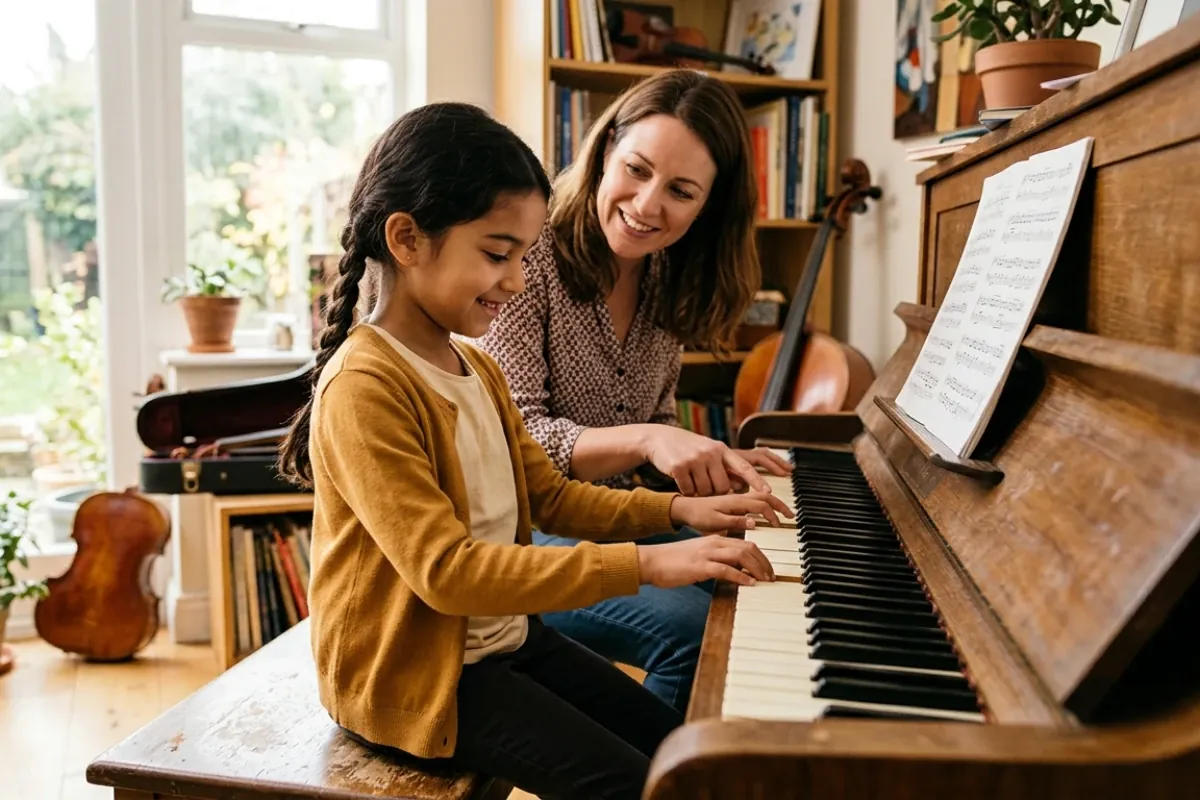
Searching for “cadenza music & performing arts academy” usually starts with a practical question: Is this a place where my child, or I, could feel comfortable learning something creative?
Other questions follow quickly. What kinds of arts can you study? Are beginners welcome? How do lessons and performances fit together? And what should you know before committing to a weekly class?
Cadenza Music & Art Academy is an arts education school in North Vancouver, British Columbia. Its educational scope includes music, theater, dance, and visual arts, with learning opportunities for different ages and experience levels. Private lessons, group programs, specialized intensives, and performance experiences are part of its approach.
Those details provide a starting point. Choosing an arts education, though, takes more than reading a program description. This guide explains what that learning can involve, how to think about fit, and which practical questions deserve answers.
The phrase “Cadenza music & performing arts academy” points to a specific school, but the search can reflect several different needs. A parent may be exploring a first music lesson. A teenager may want a creative outlet beyond school. An adult may be returning to an instrument after years away.
Some readers are simply trying to understand the academy’s educational approach before looking at individual programs. The academy’s About page is a useful place to learn more about its background and philosophy.
It helps to separate two questions: What does the academy teach, and what kind of learning experience do you need?
A broad selection of disciplines can be appealing, especially when a child has several interests. Yet the best starting point is usually a manageable commitment that matches the learner’s curiosity, readiness, and schedule. You do not need to map out an entire artistic future before taking a first lesson.
A multidisciplinary arts school brings several creative subjects into one educational setting. The subjects remain distinct, but they share skills such as listening, concentration, interpretation, and communicating an idea.
Cadenza’s stated areas of study include music, theater, dance, and arts programs. Specific classes, instruments, age groupings, and schedules should be confirmed directly, since broad program categories do not tell you what is currently available.
Music education involves more than learning the correct notes. Students may work on rhythm, pitch, coordination, technique, musical notation, and expression. The balance depends on the instrument, the student’s age, and the lesson goals.
For a young beginner, progress might mean keeping a steady beat or recognizing a familiar melody. For an experienced learner, it could mean shaping a phrase more deliberately or performing a difficult passage with less physical tension.
Instrument choice matters, too. Consider the learner’s interest alongside practical needs such as access to an instrument, space at home, and maintenance. A child’s enthusiasm for a particular sound is valuable information, even when a parent originally imagined a different instrument.
Theater education can include movement, voice, improvisation, character development, and working with other performers.
A quieter student does not need to become the loudest person in the room to participate meaningfully. Listening closely, responding thoughtfully, and making a clear performance choice are all useful theater skills.
Families should ask whether a particular program focuses on introductory exploration, acting technique, musical theater, or preparing a production. These experiences can have quite different expectations.
Dance learning may involve rhythm, coordination, balance, memory, and expression through movement. The physical demands vary considerably by style and level.
For beginners, clear instruction and appropriate progression matter more than how impressive a routine looks. Ask about placement, clothing, footwear, and how teachers respond when a student needs a movement adapted.
Students should also know that they can speak up about pain or discomfort. Working hard and ignoring pain are different things.
Visual arts give students another way to explore ideas. Drawing, painting, and other media can involve observation, planning, material skills, and revision.
For children who enjoy several disciplines, visual arts may complement performance-based study without adding another stage commitment. The experience also makes room for a useful lesson: an initial attempt does not have to be the final version.
Cadenza’s educational model includes private lessons and group programs. Neither format is automatically better. They address different needs.
Private lessons allow focused attention on one student’s technique, pace, interests, and questions. A teacher can spend extra time on a difficult skill or adjust an explanation when something is not making sense.
Group learning creates a different experience. Students practice listening to others, sharing space, taking turns, and contributing to a common activity. For some learners, the social side makes attendance and practice more appealing.
The trade-off is worth considering. A student who needs detailed individual feedback may benefit from private instruction. Someone who feels energized by peers may enjoy a group setting. Others find a combination useful, provided the workload remains reasonable.
Specialized intensives are another option, but the term alone does not establish suitability. Ask about prerequisites, daily workload, and the intended learning outcome before enrolling.
There is no single age at which every child becomes ready for formal arts instruction. Readiness depends partly on the activity and partly on how the class is designed.
A young child might be ready for a playful group introduction while finding a longer, highly structured private lesson difficult. Another child may enjoy focused individual work but feel overwhelmed in a busy room.
Look for curiosity rather than polished ability. Does your child return to the keyboard, sing while playing, invent dances, or draw without being prompted? Those interests can help guide a first choice.
Attention also develops with support. Beginners are not expected to arrive with perfect concentration, but expectations should fit their developmental stage.
For families, a useful question is: “What would participation look like for a child like mine?” Describe your child’s interests, communication preferences, and any relevant support needs. That conversation is more informative than asking whether a class is simply “good for beginners.”
Adults often bring a different concern to a first lesson: the feeling that they should already know more.
You do not need childhood training to begin studying an art form. You do need a realistic starting point and enough room in your schedule to return to the work regularly.
An adult beginner might want to play familiar music, explore acting, or enjoy a weekly creative practice. A returning learner may remember a great deal while needing time to rebuild coordination and stamina.
Explain your goals honestly. If public performance does not interest you, say so. If you want to work toward it but feel nervous, that is useful information as well.
Progress can be satisfying without becoming a professional ambition. Learning a piece you care about or feeling more comfortable using your voice is a legitimate goal.
Cadenza has a dedicated recital hall and includes performance opportunities in its educational approach. Access to a performance space can help students connect lesson work with the experience of sharing it.
Preparation introduces skills that ordinary practice may not fully address. Students learn how to begin when people are watching, maintain focus, recover after a mistake, and bring a piece or scene to a clear ending.
Still, a recital should not become the only measure of progress.
A student may improve substantially before being ready to perform publicly. Another may enjoy the stage while still needing patient work on fundamentals. Both deserve thoughtful instruction.
For a nervous learner, ask how performance participation is introduced. Smaller steps, such as playing for a teacher or a few familiar people, may help build comfort. Confidence is more likely to grow when the challenge is manageable and preparation is clear.
The most useful post-performance conversation is specific. “You kept going after losing your place” gives a learner something concrete to recognize and repeat.
An arts education that draws on different traditions can broaden what students hear, see, and understand. The educational value depends on how those traditions are taught.
Learning a song, dance, or dramatic work is more meaningful when students also encounter its cultural context. Who created it? What language or community is connected to it? What conventions shape its performance?
Respectful teaching avoids treating one tradition as the standard against which every other tradition is measured.
Families can ask how repertoire is chosen and whether students can bring their own cultural interests into lessons. A learner’s home language, family music, or community experiences may provide a meaningful connection to study.
No single program can cover every artistic tradition in depth. Clear acknowledgment of that limit is a strength, not a shortcoming.
For families in North Vancouver, West Vancouver, Vancouver, and Burnaby, travel is part of the educational decision.
Cadenza is located in North Vancouver. Readers elsewhere in the region should evaluate the actual trip rather than assume that a nearby municipality means an easy weekly journey.
Bridge traffic, transit connections, school dismissal times, and evening routines can affect attendance. A lesson that looks convenient on a map may be harder to sustain during the school year.
Think about the learner’s energy as well. A young child arriving hungry after a long commute may struggle with a class they would otherwise enjoy.
Before committing, check the journey at roughly the time you would travel. Ask about arrival arrangements, accessibility, and whether a parent or caregiver needs to remain nearby. These details can matter as much as the class itself.
Program descriptions provide an overview. A direct conversation should clarify what participation will involve.
Useful questions include:
Do not assume that a trial lesson, instrument rental, examination pathway, or particular accommodation is available. Ask directly and get the relevant details before making plans around it.
Clear answers help both the learner and the teacher begin with shared expectations.
The first few weeks are a period of adjustment. New learners are getting used to a teacher, a space, unfamiliar vocabulary, and the experience of making mistakes where someone else can hear or see them.
Keep home expectations modest and specific. If practice is assigned, ask the teacher what to work on, how to approach it, and what a reasonable routine looks like. Repeating a confusing exercise for longer is not always productive.
For children, try asking, “What did you discover today?” rather than immediately asking whether they were good at it. Adults can use a similar approach by recording one thing that became clearer after each lesson.
After several sessions, look for signs of a workable fit: understandable feedback, appropriate challenge, respectful communication, and some willingness to return. Every lesson does not need to feel effortless or exciting.
Understanding Cadenza Music & Performing Arts Academy means looking at both its range of arts education and the everyday experience a learner needs.
A North Vancouver setting, multiple artistic disciplines, private and group learning, and access to performance opportunities provide a framework. The personal fit comes through the details: the teacher, the program, the schedule, and the expectations.
Start with a genuine interest. Ask practical questions. Leave room for that interest to change.
A worthwhile arts education gives learners something they can work on today, along with the support to keep exploring tomorrow.

